
A complete ecosystem of human-based platforms, satellite products, and clinical demonstrators designed to revolutionize drug discovery and disease modelling
Next-generation Organs-on-Chip integrating mechanical stimulation, electrophysiology, and force sensing
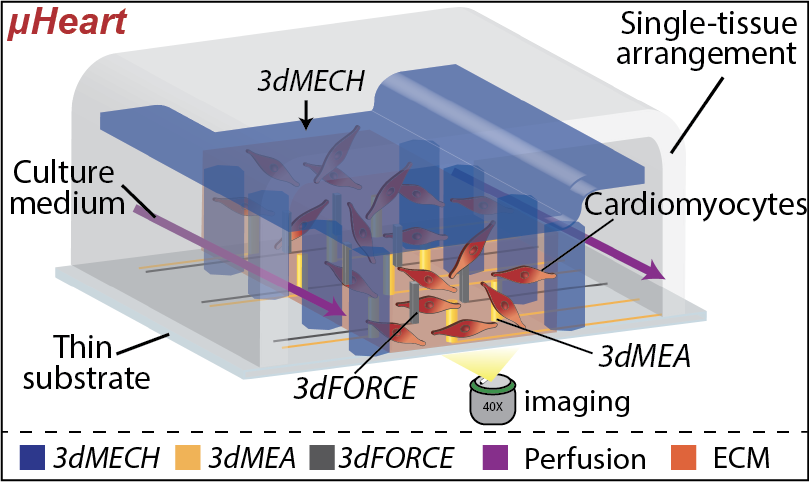
What it models: Human cardiac tissue function, recapitulating electrical and mechanical activity.
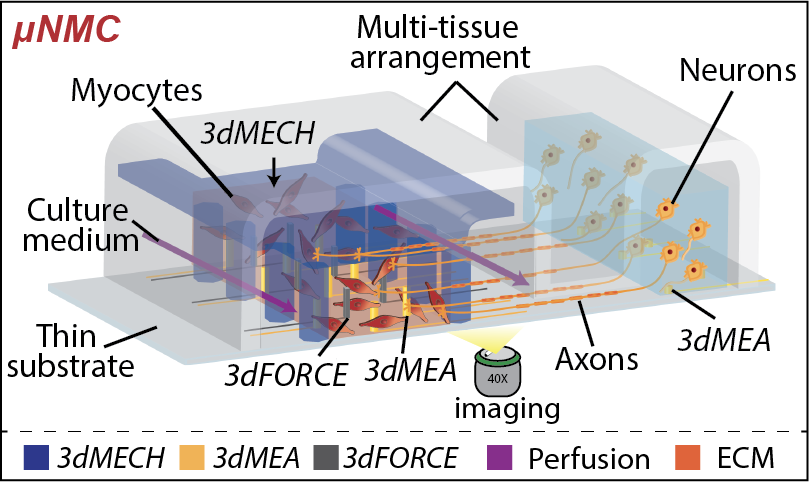
What it models: The complex interaction between neurons and muscle fibers, including both afferent circuits (sensory neurons to muscle) and efferent circuits (motor neurons to muscle).
What it models: High-throughput cardiac safety and toxicology screening.
| Feature | MVP (Prototype) | Base/+ (Professional) | Pro (Industrial) |
|---|---|---|---|
| Material | Standard PDMS | PDMS-free (no drug absorption) | PDMS-free / Industrial Grade |
| Throughput | Low (Research scale) | Medium | High (Automated screening) |
| Automation | Manual | Automation-compatible | Full robotic integration |
| Readout | Basic Electrical/Mech | High-density 3dMEA/FORCE | Real-time Big Data Analytics |
PHOENIX is not just the chip—it's a complete turnkey system for industrial-grade human-based modelling
The dedicated control unit for high-precision mechanical stimulation (3dMECH).
An automated microfluidic system for precise media exchange and drug dosing, essential for long-term culture and "Pro" workflows.
Advanced hardware for high-density electrophysiological and contractility data acquisition (Base+ and Pro levels).
Standardized healthy and diseased human iPSC lines, ensuring biological consistency across all experiments.
Validating PHOENIX platforms on real human diseases, reducing reliance on animal models
Background: A group of genetic heart diseases leading to arrhythmias and heart failure.
Why it's a good demonstrator: It requires the integration of both electrical and mechanical readouts to understand the disease mechanism.
Background: A rare genetic disease causing progressive nervous system damage and muscle weakness.
Why it's a good demonstrator: It allows for the study of the impaired communication between neurons and muscles in a controlled environment.